How To Be a Glorious Mess + The Kept Hours
Two courses. One philosophy. A complete reimagining of what it means to be at home in your life.
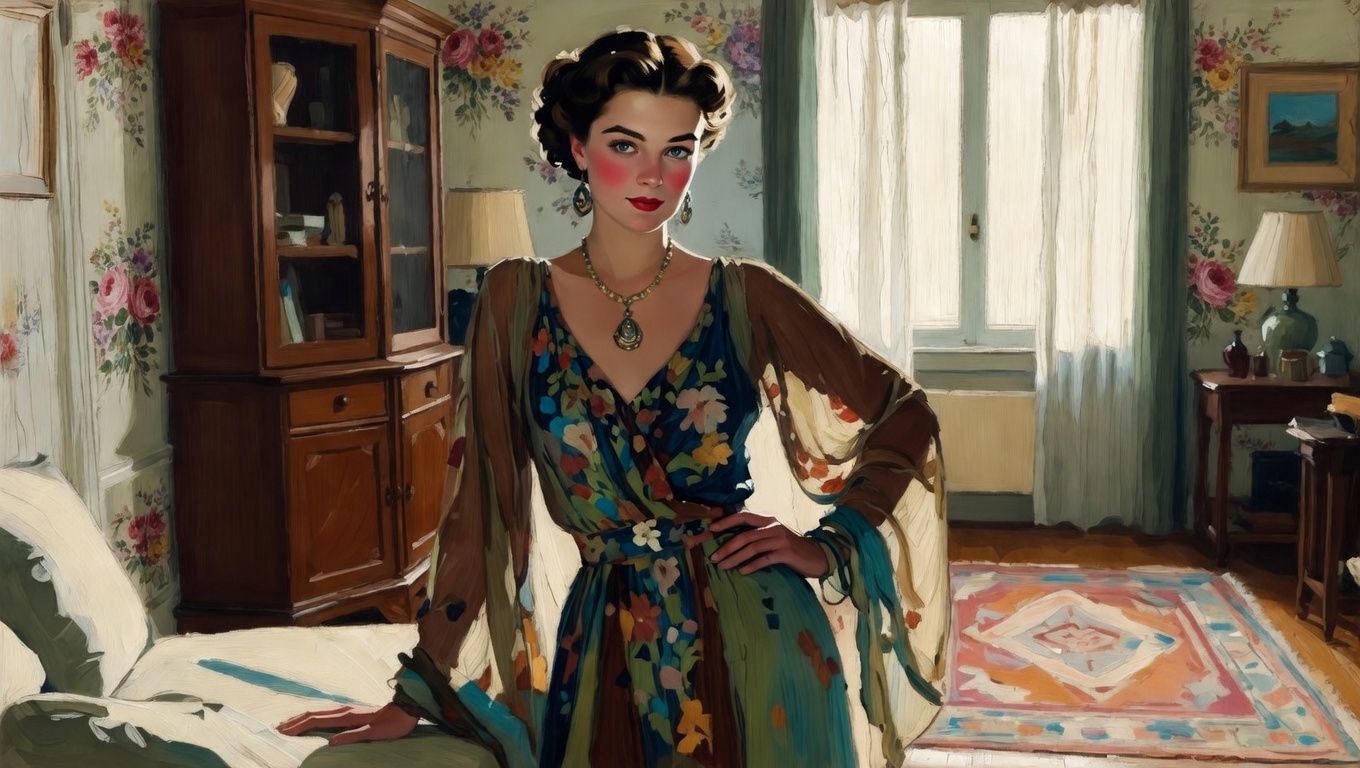
The Glorious Year
Course One: How To Be a Glorious Mess — The Undoing Course Two: The Kept Hours — The Rebuilding
A journey for women in midlife who are ready to stop pretending, masking, and performing — and are instead ready to start living.
[Begin the Glorious Year]
This is what I know to be true after two decades of working with women.
You are not a mess because you're failing. You're a mess because you're human, and you've been pretending otherwise for so long that the pretence itself has become exhausting.
The Glorious Year is my answer to every productivity guru, every decluttering expert, every wellness influencer who has made you feel that your natural state is a problem to be solved.
It isn't.
Your mess — domestic, emotional, existential, or neurodivergent — is not evidence of dysfunction. It's evidence of a life being lived by a complicated person in a complicated world. And the sooner we stop pathologising it, the sooner we can get on with the actual business of being alive.
Sixteen weeks. Two movements. First the exhale, then the inhale. First the undoing, then the rebuilding.
Part One
How To Be a Glorious Mess
The Undoing
Eight weeks of radical permission. Eight weeks of examining what you've been performing and why. Eight weeks of strategic neglect, excavated desire, and the slow, strange relief of letting things fall apart.
Module One — The Lie of Having It Together Muse: Nora Ephron
We begin by naming the performance. The invisible labour of appearing competent and the cost of curating a life that looks manageable. You will identify your own performances — the ones you maintain for family, for work, for your own brutal sense of self-worth — and we will examine, together, whether they're actually serving you.
(Spoiler: they're probably not.)
Nora Ephron wrote about her neck, her divorce, her disappointments with such wit that we forgot she was confessing. She proved you could let people see the mess and become more beloved for it.
Module Two — The Art of Strategic Neglect Muse: Jamaica Kincaid
Because what if some things are meant to be neglected?
We spend so much energy maintaining things that don't actually need maintaining. Friendships that have run their course. Standards that were never ours to begin with. Expectations we inherited from mums who inherited them from their mums. Generations of muddled effort to maintain ideas that have no meaning to us.
This module is about identifying what you can safely let die — and discovering what grows in its place.
Jamaica Kincaid, the gardener who wrote about letting her garden grow wild, and who understood that neglect is its own form of attention.
Module Three — Desire as Compass Muse: Patti Smith
Here is the question I most want you to sit with: what do you actually want?
Not what you should want. Not what would be sensible to want. Not what you've trained yourself to want because the real thing seemed too much to ask for.
After years of serving everyone else's needs, many women have forgotten what they actually desire. This module is an archaeological dig — excavating buried wants, distinguishing between what we want and what we've been told we should want.
Patti Smith wanted to be a poet, then a rock star, then a mother, then a memoirist, and refused to apologise for any of it.
Module Four — The Glorious Mess Itself Muse: Virginia Woolf
Here now. The heart of the course.
Here, we stop treating mess as the enemy and start treating it as texture. As evidence. As the natural state of a life being lived fully rather than performed perfectly. You will document your own messes — literal and metaphorical — and practise describing them without apology. You will learn to see chaos not as failure but as creative raw material.
Virginia Woolf, whose diaries reveal the tangle beneath the polished sentences. Depression, jealousy, uncertainty, the desperate need for praise. Her mess was legendary, and so is what she made from it.
Module Five — Boundaries as Structure Muse: Toni Morrison
Not the Instagram version of boundaries — the kind where you say no with a serene smile and everyone respects you immediately.
Real boundaries. The structural kind. The load-bearing walls of a life.
This module is about what you protect, what you refuse, and what you finally stop explaining. We'll examine where your energy leaks and how to build walls that actually hold you up.
Toni Morrison raised two sons alone while working as an editor and wrote her novels at four in the morning before anyone woke. Her boundaries weren't polite. They were structure.
Module Six — The Unfinished Life Muse: Emily Dickinson
Against completion. Against ticking boxes. Against the tyranny of done.
There is a particular kind of freedom in accepting that some things will never be finished, and that finishing was never the point. This module celebrates the draft, the work-in-progress, the perpetual becoming. You will identify something you've been trying to finish for years and consider whether it needs finishing at all. Perhaps it was always meant to remain beautifully incomplete.
Emily Dickinson sewed her poems into fascicles but never published them. She lived in draft form. Her work remained unfinished by conventional standards and yet was complete in ways we're still discovering.
Module Seven — Wild, True, and Less Contained Muse: Ursula K. Le Guin
What would you do if you stopped containing yourself?
Midlife offers a strange gift: the freedom that comes from caring less about what other people think. The opinions of strangers matter less. The need to be liked softens. The wildness that was always there, tamped down for decades, starts to stir.
This module is about letting it out.
Ursula K. Le Guin wrote science fiction when it wasn't respectable, refused the conventions of her genre and her gender, and became wilder and more outspoken as she aged.
Module Eight — The Glorious Mess Manifesto Muse: Mary Oliver
You will end this course by writing your own manifesto.
A declaration of who you are now, what you refuse, and what you're becoming. A document to return to when the pressure to perform resurfaces — which it will. A stake in the ground.
Mary Oliver asked what you plan to do with your one wild and precious life, and meant it as instruction.
Part Two
The Kept Hours
The Rebuilding
If How To Be a Glorious Mess is the exhale — the permission to stop, to let things fall apart, to discover what remains when you stop holding everything together — then The Kept Hours is the inhale.
The tender rebuilding.
Because here's the thing: once you've stopped performing, once you've let the unnecessary fall away, you're left with a question.
Now what?
What do you do for yourself when you're no longer doing everything for everyone else?
The Kept Hours answers that question with extraordinary specificity. This is not vague wellness advice. This is a course in the precise, stylish, repeatable rituals that make a life feel like home.
These are the hours you keep for yourself. The practices you maintain like a hearth fire. There's something almost monastic about it — but in a soft, secular, wholly feminine way.
The structure: eight weeks, four domains, two passes.
The four domains are Heart, Home, Body, and Soul — woven together rather than separated, because they are woven, aren't they? The state of your bedroom affects your sleep affects your mood affects your capacity for joy.
The first four weeks focus on The Morning Hours — establishing what happens between waking and the world rushing in.
The second four weeks focus on The Evening Hours — creating closure, rest, and the small ceremonies of ending.
The Morning Hours
Week One — The First Hour
What happens in the sixty minutes after you wake?
For most women, it's chaos. The phone is checked before feet hit the floor. Other people's needs begin immediately. The day owns you before you've had a chance to own it.
We will build what I call a minimum viable morning — not a punishing routine, but a sequence so gentle you actually do it. Perhaps: kettle on, face washed with cold water, five minutes outside or at an open window. That's it. That's enough.
Objects worth having: a proper kettle that sings or clicks. A linen face cloth hung where you can reach it half-asleep. A dressing gown substantial enough to wear outside — velvet, quilted cotton, or wool.
Week Two — The Kept Kitchen
The rituals of feeding yourself well, without performance.
Most women feed everyone else before themselves. Breakfast is grabbed standing up while orchestrating other people's departures. This week, we reclaim the first meal as ceremony.
You will establish a signature breakfast — something nourishing you can make half-asleep, the same thing every day until it becomes as automatic as breathing. You will identify three things that live permanently in your fridge for this purpose. You will learn to make tea as though it matters, because it does.
Objects worth having: a teapot that holds two cups. A breakfast bowl that pleases you — heavy and handmade if possible. A butter dish with a lid, kept on the counter, because cold butter on toast is a small tragedy.
Week Three — The Moved Body
Not exercise as penance. Movement as the price of admission to your own life.
We have been sold exercise as debt repayment: calories earned, punishment for pleasure, maintenance against decay. This is exhausting and largely counterproductive. Movement in midlife is not about the body you're trying to achieve — it's about inhabiting the body you have.
You will establish a fifteen-minute floor practice, so accessible you cannot argue yourself out of it. And you will consider the morning walk as spiritual discipline, not athletic achievement.
Objects worth having: a yoga mat left unrolled and visible. Walking shoes kept by the door. A simple timer that isn't your phone.
Week Four — The Tended Heart
A practice for processing emotion before the day buries it.
Women are trained to be emotional caretakers. We process everyone else's feelings while our own go unwitnessed. This week, we establish a practice for tending our own hearts — morning pages, or a simpler alternative if three pages feels like too much.
Objects worth having: a cheap notebook dedicated to morning writing. A pen that flows smoothly. A box for completed notebooks that need never be reread.
The Evening Hours
Week Five — The Crossing Hour
The threshold between work and rest.
The problem with modern life is that it doesn't end. Work bleeds into evening. Screens follow us to bed. There is no threshold, no crossing.
This week, we build one. A closing ritual — a consistent sequence of actions that tells your nervous system the day's demands are done. A physical threshold. A change of clothes. A drink that signals evening.
Objects worth having: a dedicated evening glass or cup. At-home clothes kept separate from daywear — cashmere if you can, soft cotton if not. A candle with a scent reserved for this hour.
Week Six — The Evening Kitchen
Supper as ceremony.
You will establish a repertoire of seven simple suppers, one for each night, rotating weekly. After a month, you will never have to decide what's for dinner again. The cognitive load vanishes.
More importantly: you will eat at a table. With a proper plate, a cloth napkin, a glass. Even alone. Especially alone.
Objects worth having: placemats you love. Cloth napkins that need laundering. A small collection of nightcap glasses.
Week Seven — The Rested Body
Sleep as the foundation everything else is built on.
In midlife, sleep becomes more difficult and more essential. This week, we treat it with the seriousness it deserves. You will conduct a bedroom audit — examining whether your room invites sleep or merely tolerates it. You will establish the hour before bed as screen-free territory. You will create a shutdown sequence so consistent it becomes lullaby.
Objects worth having: a bedside carafe and glass. A reading lamp with warm light. And the most important object in the entire course: a phone charging station outside the bedroom.
Week Eight — The Quiet Soul
Practices for ending the day with something other than scrolling.
The day ends not with turning off lights but with what we do in the final conscious hours. For most of us, this is scrolling — an activity that leaves no residue, no nourishment.
You will choose one practice for the final hour: reading, writing, handwork, meditation, or simply sitting in the dark. The practice becomes the vessel into which the day is poured.
Objects worth having: a beautiful book kept half-read. A small notebook for one line per day. A blanket for sitting that says: this is contemplation time.
The Muses of The Kept Hours
M.F.K. Fisher — who wrote about food as philosophy, whose essays on eating alone are masterclasses in self-regard. She teaches us that meals prepared for oneself are not lesser meals.
May Sarton — the poet who lived alone in Maine and wrote journals about the difficulty and necessity of structuring solitude. She teaches us that ritual is not rigidity — it's the framework that makes freedom possible.
Thich Nhat Hanh — whose teachings on washing dishes as meditation, on the sacred ordinary, are too essential to omit. He teaches us that the spiritual life is found precisely in the domestic one.
Alexandra Stoddard — the interior designer who wrote about daily rituals of beauty. She teaches us that you deserve the good china, the fresh flowers, the properly made bed.
IS THIS FOR YOU?
This course is for you if —
— You are tired of your life feeling like a performance you didn't audition for.
— You have spent years maintaining things — standards, relationships, appearances — that were never really yours to begin with.
— You are somewhere in midlife and the permission to stop pretending feels long overdue.
— You prefer to work privately, at your own pace, without a cohort watching or a community to perform for.
— You want to think seriously and beautifully about your domestic life without being talked down to.
— You have read enough self-help to know you don't want another one, but you would read a long essay about Toni Morrison's writing practice at four in the morning at any time of day.
— You are ready, finally, for the rebuilding.
WHAT'S INCLUDED
Sixteen weeks. Everything you need.
Both courses are yours the moment you enrol. Self-led, self-paced, no cohort, no live calls, no community unless you want one. Just you, the work, and sixteen weeks of genuinely good company.
✦ How to Be a Glorious Mess — all eight modules Eight muses, eight core essays, eighty workbook questions, companion films, books, playlists, poems, and closing rituals.
✦ The Kept Hours — all eight weeks Morning and evening, heart and home, body and soul. Eight weeks of precise, repeatable rituals with essays, muse deep dives, workbook questions, companion materials, and suggested objects for every single week.
✦ Sixteen closing rituals Embodied, specific, varied. Something to do with your actual life, not just your journal.
✦ Full companion libraries Film, book, playlist, and poem for every week of both courses.
✦ Lifetime access Return to any week, any time, in any order. The course is yours to keep.
ENROLMENT
The complete Glorious Year
Full sixteen-week bundle
$49
One payment. Lifetime access.
How to Be a Glorious Mess (8 weeks) + The Kept Hours (8 weeks) All essays, workbooks, rituals, muses, and companion libraries included.
Secure checkout · Immediate access · Yours to keep
· · ·
"You have already done the hard part. You have already looked honestly at your life. This is just the part where you make it beautiful."
Sixteen weeks. Two movements. One glorious year.
The Glorious Year is a self-led digital course delivered via Kajabi. Both courses are available in your library immediately upon enrolment.
Sign Up and Make Life Lovelier Today...