On the Violence of Tidiness
Feb 05, 2026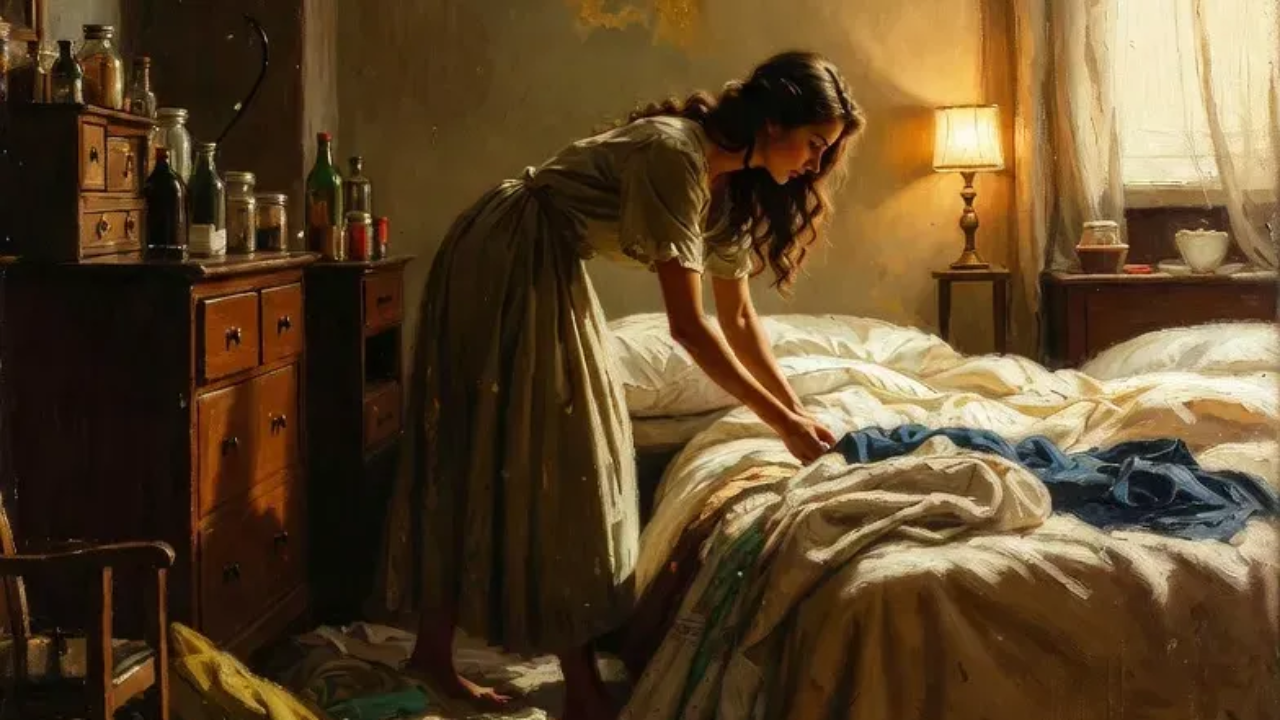
When I was younger, I believed that order was a form of love (I could not gift myself).
The way my mother set the table with her quilted lace placemats as if performing domesticity on the surface (while everything underneath stayed wild and unmanaged), could soothe her constantly anxious mind.
I thought: this must be how we hold things together.
This is how we show we care.
But somewhere in my fifties, standing in a house with plaster dust covering everything I own, I began to suspect I had confused love with control.
Devotion with suppression.
The sacred act of tending with the violent act of erasing.
What changes when we recognise the violence of the tidy?
I.
Let me tell you what Anne Carson said about fragments: “Why does tragedy exist? Because you are full of rage. Why are you full of rage? Because you are full of grief.”
The tidy house is a tragedy.
Because it erases the rage.
Because it blows the grief away.
Because it insists that everything broken must be hidden, that everything spilled must be immediately cleaned, that the evidence of your living, your rage, your grief, your hunger, your need, must be smoothed over before anyone sees.
My Mum set the table like a stage set. But the mirrored doors of her wardrobe wouldn’t close properly. The cupboards were stuffed with a hundred versions of the woman she might on any given day, be.
(She is so much with me right now. Eleven years gone).
And I inherited both: the performance and the mess.
But.
What if the mess is the prayer?
What if the unwashed dishes are not failure but offering?
What if the unmade bed is a form of resistance?
II.
Hildegard von Bingen had visions. She called the life force viriditas: greening power. The force that makes things grow, that breaks through stone, that refuses containment.
You cannot tidy viriditas.
You cannot organise the life force.
It grows where it wants.
It makes a mess.
It leaves evidence.
Hélène Cixous wrote: “I am spacious, singing flesh.” Not contained flesh. Not managed flesh. Not flesh that has learned to take up only the acceptable amount of space.
Spacious.
Singing.
Spilling over.
The house I live in now is falling down. There are holes were windows should be. The floorboards are being ripped up. Everything hidden is somewhat exposed: the old wiring, the rotting joists, plumbing without sinks. Places where time tried to patch and hide and make do.
It is a metaphor so obvious it embarrasses me.
But metaphors become obvious because they are true.
What are we hiding when we tidy?
What rot are we papering over?
What structural damage are we pretending isn’t there?
My mother hid hers behind the perfectly set table.
What am I trying to cover with the facade that all is well? That all is immaculate and just as it should be?
III.
In Chantal Akerman’s film Jeanne Dielman, 23, quai du Commerce, 1080 Bruxelles, we watch a woman perform her domestic routine in real time. She peels potatoes. She makes meatloaf. She polishes shoes. The camera never looks away. Three hours of domestic acts, performed with precision.
(I can’t stop talking about it. Cannot stop watching it. Kinship. Horror).
And then.
A potato falls.
The routine cracks.
And violence enters.
The film understands what many of us spend our lives trying not to know: the line between domestic order and domestic violence is thinner than we pretend. The same hands that smooth the sheets can smooth over the truth. The same attention to detail that creates beauty can create a prison.
Akerman shows us that the violence is not in the mess.
The violence is in the demand for perfection.
The violence is in the watching.
The violence is almost always in the domestication of what will not be contained.
IV.
Here is what I am learning:
That mess is honest.
That mess tells the truth about time.
That mess says: someone lives here. Someone is in the middle of something. Someone is becoming something they have not yet become. Something is being born.
(And in the mess here, something in me cannot be unborn, so I can no more stuff the anger back inside me, than I could have my child back in my womb).
Bhanu Kapil writes books that refuse to be books. She calls them “anti-books.” Fragments scattered across pages. Stories that won’t cohere. She buries manuscripts in gardens and digs them up changed by weather and worms and time.
She understands that some things cannot be contained.
Some things must be approached obliquely.
Some things must be allowed to decompose and transform.
The same is true of living.
You cannot define it by tidying it.
You cannot understand it by organising it.
You must bury it in the garden.
Let it rot.And see what grows.
V.
Let me tell you about Kali.
The Hindu goddess of destruction and creation.
She wears a garland of skulls.
She dances on corpses.
Her tongue lolls out, dripping blood.
She is not tidy.
She is not contained.
She destroys in order to create.
She makes space by making a mess.
Western spirituality wants us to transcend the body, to rise above the mess of embodiment. But the goddess traditions know better. They know that the body is not a problem to be solved. The mess is not something to overcome.
The body is the temple.
The mess is the practice.
The blood and milk and shit and spit and all the fluids we leak: all of it holy.
Menstruation.
Menopause.
The slow leak of our aging bodies refusing to stay contained, refusing to stay dry and neat and manageable.
All of it is human.
All of it evidence of being alive.
Louise Bourgeois made sculptures of houses and spiders and cells. She understood that domesticity is trauma. That the home is where we are first wounded. That the mother is both creation and destruction.
She didn’t tidy that understanding away.
She made art from it.
She said: “Art is the guarantee of sanity.”
Maybe mess is too?
VI.
What does it mean once we recognise the violence of the tidy?
It means we are in the desert now.
The desert mothers knew this. They left the cities with their rules and performances. They went into the wilderness. They lived in caves. They let their hair grow wild. They stopped performing femininity and started performing holiness, which is to say, they stopped performing altogether.
They sat in the mess of their own minds.
They let the demons come.
They didn’t tidy them away.
Teresa of Ávila wrote about the soul as a castle with many rooms. She said that to reach the innermost chamber, you must pass through all the others. You must see what is in each room. You cannot skip ahead. You cannot tidy your way to God.
You must walk through the mess.
Meister Eckhart, the medieval mystic, taught about the apophatic way: knowing God through unknowing. Through darkness. Through the stripping away of everything you thought you knew.
You cannot tidy your way to the divine.
You must sit in the dark.
You must not know.
You must let everything fall apart. And there, there it might be.
VII.
Should we despise the part of ourselves that longs for order?
No.
God, no.
But we must learn the difference between:
Order that serves life
and
Order that serves death
Between:
Tending
and
Controlling
Between:
Making space
and
Creating performance
Between:
The altar
and
The stage
Natalie Diaz writes: “The water was the first thing my brother told me about, how clear it was. My brother is a drink of water: dark and direct.”
Some things are clear precisely because they are deep.
Some things are beautiful precisely because they are honest.
The mess can be both. Let it, let it, let it.
VIII.
Ocean Vuong wrote: “In the body, where everything has a price, I was a beggar.”
In the tidy house, where everything must be earned, we are all beggars.
We beg for permission to be messy.
We beg for permission to be tired.
We beg for permission to leave the dishes, to skip the cleaning, to let things pile up while we do something else, anything else, something that matters more.
But what if we stopped begging?
What if we claimed the mess as our birthright?
IX.
Adrienne Rich wrote: “A wild patience has taken me this far.”
Wild patience.
Not tidy patience.
Not the patience of waiting nicely while performing calm.
But wild patience.
The patience of a wolf waiting for spring.
The patience of the seed under snow.
The patience of women who have survived by waiting but have not been diminished by it.
This is the patience required to live with mess.
To let things be unfinished.
To allow the evidence of your living to accumulate.
To trust that the pattern will emerge in time, that the meaning is being made even when you cannot see it yet.
X.
I want to tell you about wabi-sabi.
The Japanese aesthetic of imperfection.
The beauty of things incomplete, impermanent, imperfect.
The tea bowl with the crack.
The asymmetrical flower arrangement.
The patina of age and use.
In the West, we repair cracks by trying to make them invisible. We want the object to look new again, unmarked, perfect.
In Japan, they practice kintsugi: repairing broken pottery with gold. They make the cracks visible. They honour the breaking. They say: this object has lived. It has a history. It has survived.
The gold makes it more beautiful, not less.
What if we treated our lives this way? What if we highlighted the cracks instead of hiding them?
What if we said: I am broken AND mended and that is my beauty?
XI.
Annie Ernaux wrote her whole life as if sociology. She cataloged her abortions, her affairs, her marriage, her parents’ deaths. She refused to tidy the narrative. She refused to make it palatable.
She just told the truth.
She said: “I shall continue living as I have done hitherto, committing to memory the image of the world around me and trying not to let my own history obliterate that of others.”
The mess is history.
The mess is evidence.
The mess is the record of what actually happened, not what we wish had happened, not what we performed for the watching world, but what was real.
XII.
Let me be very clear:
I am not romanticising squalor.
Nor glorifying dysfunction.
I am definitely not suggesting that we should live in filth or chaos or harm.
There is a difference between:
Holy disorder
and
Toxic chaos
Between:
Creative mess
and
Punishing neglect
Between:
Evidence of life
and
Proof of death
Clarice Lispector knew this. She wrote an entire book about an apple. Just sat with it. Looked at it. Refused to tidy it into metaphor or meaning. Let it be what it was: strange, ordinary, and impossible to explain.
She also wrote about cleaning the house, about the spider behind the furniture, about the ordinary violence of domestic life. She didn’t tidy it into metaphor. She let it be what it was: strange, unsettling, true.
She wrote: “I want the intense pleasure of not knowing.”
The tidy house is the house that knows.
The tidy house has decided. It is FINISHED.
But we are never finished.
We are always in the middle.
We are still in the not-knowing.
XIII.
Here is a list of things that are messy:
Birth
Death
Sex
Cooking
Painting
Writing
Gardening
Loving
Learning
Healing
Bleeding
Creating anything real
Living
Here is a list of things that are tidy:
Museums
Showrooms
Magazines
Funerals
Facades
Lies
XIV.
Rumi said: “The wound is the place where the Light enters you.”
But first there must BE a wound.
First there must be breaking.
First there must be mess.
We spend so much time trying to prevent the breaking. Trying to keep everything together. Trying to maintain the surface.
But what if the breaking is the point?
What if we are meant to crack open?
What if the mess is where the light gets in? Who are we to suture it shut?
XV.
Mary Oliver asked: “Tell me, what is it you plan to do with your one wild and precious life?”
She didn’t ask: what is it you plan to curate?
She didn’t ask: what is it you plan to perform?
She asked: what will you do?
Doing is messy.
Wild is messy.
Precious things are often fragile, and fragile things break, and broken things make a mess.
This is not a problem.
This is the process.
XVI.
Leonora Carrington painted women with wild animals in domestic spaces. Cats the size of horses. Hyenas in drawing rooms. Women with bird heads brewing tea.
She understood that the domestic is always strange.
That the house is always a portal.
That what we call normal is just a story we agreed to tell, and if we stop telling it, other stories flood in.
Wilder stories.
Truer stories.
Stories where women aren’t tidy but feral, where houses aren’t containers but thresholds, where mess isn’t failure but freedom.
She escaped from an asylum during World War II. Walked over the Pyrenees. Refused every form of containment for the rest of her life.
She knew about the violence of tidiness.
She knew what it costs to perform sanity.
She chose wild instead.
XVII.
In Jane Campion’s The Piano, Ada doesn’t speak. She plays instead. The piano in the mud on the beach, rain pouring down, her fingers wild on the keys.
Everything about that film is untidy.
The mud.
The rain.
The costume drama gone feral.
The woman who refuses to speak the language she’s been given and invents her own instead.
She almost drowns at the end, tangled in the rope tied to her piano as it sinks into the sea. She chooses. She lets go. She rises.
But she keeps the piano in her mind.
She plays it in the dark.
She refuses to be tidy even in survival.
XVIII.
I am fifty-three years old.
I have spent decades tidying.
Tidying my house.
Tidying my appearance.
Tidying my emotions.
Tidying my appetites.
Tidying my body as it bleeds and swells and sags and refuses to stay the shape it was.
Tidying my story into something acceptable, something palatable, something that wouldn’t disturb anyone’s peace.
And I am done.
Not because I have learned to love chaos.
But because I have learned to love truth.
And truth is messier than the stories we tell about it.
XIX.
Audre Lorde wrote: “The erotic is a measure between the beginnings of our sense of self and the chaos of our strongest feelings.”
Chaos.
Our strongest feelings are chaos.
The erotic is chaos.
The self emerging is chaos.
We have been taught to fear chaos, to tidy it away, to manage and contain and control it.
But what if chaos is not the enemy?
What if chaos is the generative force?
What if we need the chaos to become?
XX.
bell hooks wrote about “homeplace” as a site of resistance. She wrote about Black women creating sanctuary in a hostile world and she understood that the domestic could be revolutionary.
But not the domestic as performance.
Not the domestic as proving anything to anyone.
The domestic as truth-telling.
As making space for reality.
As saying: this is who we are. This is how we live. This is our actual life, not the one we perform for you.
This is revolutionary.
This is holy.
THIS is the work.
XXI.
Pema Chödrön teaches about groundlessness. About learning to live without the security we think we need. She says we are always trying to get ground under our feet, always trying to find certainty, always trying to make things solid and permanent and safe.
But nothing is permanent.
Nothing is safe.
The ground is always shifting.
Tidiness is an attempt to create ground.
To make things solid.
To pretend we have control.
But we don’t.
We never did.
The mess knows this.
The mess is honest about impermanence.
The mess says: everything is always changing. Nothing stays in place. Control is illusion.
And somehow this is liberating?
XXII.
Chris Kraus wrote I Love Dick as a mess of letters and theory and desperate female desire spilling everywhere. She refused to tidy her want. She refused to make it dignified or containable.
She just wanted.
Publicly.
Messily.
Humiliatingly.
And it became art.
Not despite the mess but because of it.
Because she refused to perform having it together.
Because she let us see the raw, untidy truth of a woman in the middle of wanting something she couldn’t have.
This is what we’re NOT supposed to do.
We’re supposed to want tidily.
Appropriately.
In ways that don’t disturb anyone.
But Kraus said no to all that.
And in saying no to all that, she gave the rest of us permission.
XXIII.
What would it mean to build an altar in the mess?
Not to clean up first.
Not to make it presentable.
But to say: here, in the middle of my actual life, in the middle of the dishes and the papers and the unmade bed and the blood and the dust and the beautiful wreckage, here is holy ground.
Here is where I meet the divine.
Here is where I am most myself.
Not in the performance.
But in the truth?
XXIV.
Julian of Norwich, the medieval mystic, had a vision. God showed her something small, the size of a hazelnut, lying in the palm of her hand. And she asked: what is this?
And the answer came: It is all that is made.
She marvelled that it could last, something so small, so fragile.
And she was told: It lasts and ever shall last, because God loves it.
We don’t have to believe in God to know that the mess is small and fragile.
That the evidence of our living can be so easily swept away.
But it lasts because we are in it.
Because we love it. (Love above all things).
XXV.
Kathy Acker cut up other people’s texts and made them her own. She stole. She plagiarised. She refused the tidy boundaries between self and other, between high art and low, between what’s yours and what’s mine.
She was punk before punk knew what to do with women.
She wrote about sex and violence and desire with zero prettiness.
She made a mess of every genre she touched.
And she called it art.
She called it truth.
She refused to tidy herself into something acceptable, something publishable, something safe.
She died young. But she lived wild.
XXVI.
Eileen Myles writes: “It’s always the girl who doesn’t get to go places who knows where she is.”
The girl who stays home.
The girl in the domestic space.
The girl surrounded by mess.
She knows where she is.
Because she’s not performing movement.
She’s not performing progress.
She’s just here.
In the mess, the truth and the staying.
XXVII.
So here is what I know now, here at fifty-three, here in my falling-down house, here in the middle of my one wild and precious life, here in my bleeding, leaking, aging, refusing-to-be-contained body:
The mess is not the problem.
The mess is the truth.
The mess is the evidence.
The mess is the prayer.
The mess is the practice.
The mess is the portal.
And the violence?
The violence is in making us ashamed of being human.
The violence is in demanding we erase ourselves.
The violence is in insisting that love looks like tidiness instead of presence, performance instead of truth, surfaces instead of depths.
The violence is in teaching us that our worth depends on our ability to contain ourselves, to minimise ourselves, to tidy ourselves into something palatable and presentable and small enough not to threaten anyone.
(But we are not small. We never were).
We are not surfaces. we are depths. spacious, singing flesh. wild and holy and messy. and true. viriditas. greening power. the life force that refuses containment.
And we are done tidying ourselves away. Done making ourselves manageable and acceptable and safe.
DONE.
So we are here. In all our glorious mess.
blood hunger rage grief desire chaos wild, untidy, unperformed, uncontainable truth.
Finally. Fully. Feral.
Library Member? Visit Our Exclusive Community Here...
Join the Joy List
All things BrocanteHome. Weekly to Your Inbox
We hate SPAM. We will never sell your information, for any reason.