The Commonplace: Edition No.4
Apr 17, 2026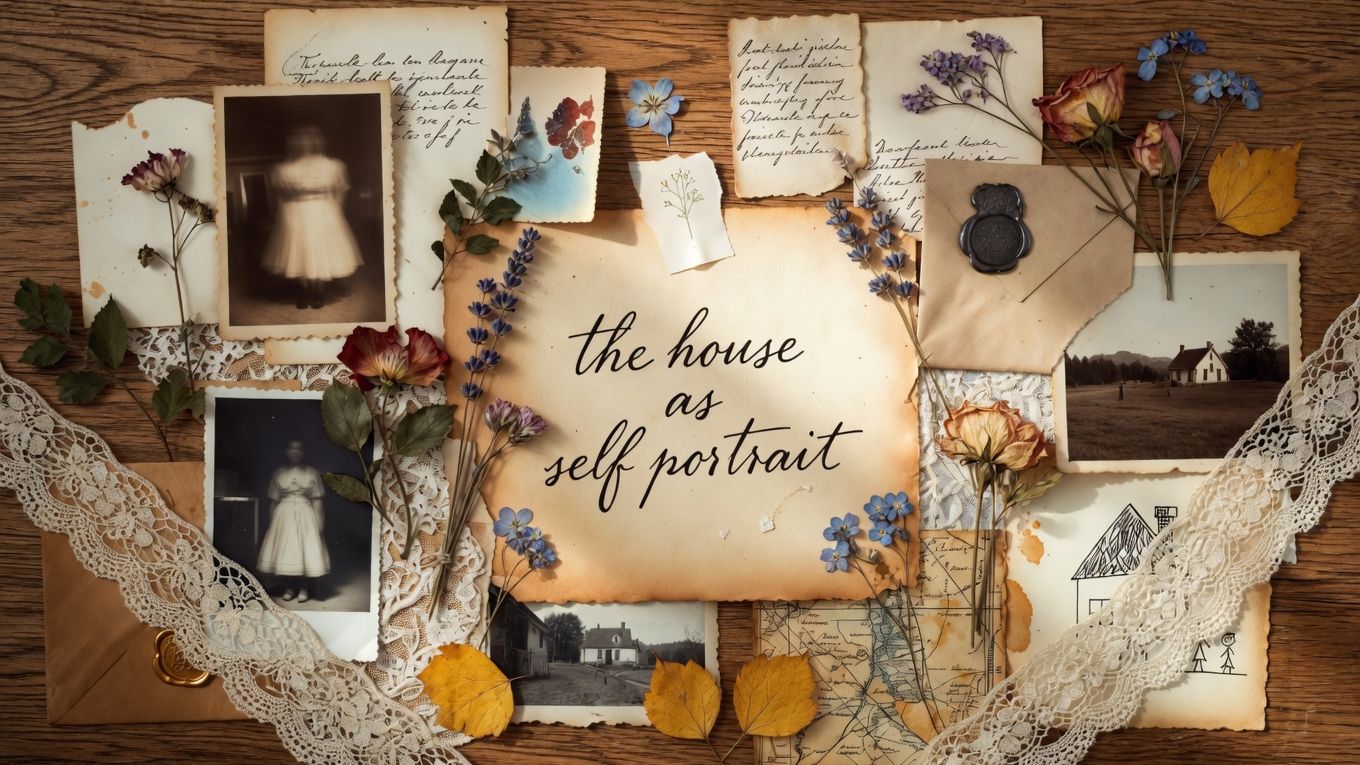
Every object in your home as a statement about who you are, who you were, and who you have not yet decided to stop becoming.
There is a woman somewhere reading this in a room she has stopped seeing. The lamp that belonged to her mother. The print she bought in a market twenty years ago and never quite got around to framing properly. The bowl on the hall table containing three dead batteries, a foreign coin, a rawl plug, and something she can no longer identify. She has walked past all of it a thousand times and seen none of it, because familiarity is the enemy of looking and most of us stopped looking at our homes years before we stopped looking at ourselves.
This week, The Commonplace asks you to look. To walk through every room as if you have never been inside them before. To see not a house, not a flat, not a rented space or a mortgaged obligation, but a self-portrait in three dimensions. Because that is what it is? Every object you have chosen, kept, inherited, tolerated, or failed to remove is a line in the autobiography you are writing without knowing it. So read it. All of it. Even the chapters you wish you could have edited out.
One hundred things. Quotes worth writing down, films worth watching, books worth reading, small deliberate acts of domestic philosophy and journal prompts for the excavation only you can do. Some will comfort you. Some will not sit quietly at all.
The first twenty-five are free. The rest are for the women who have decided that a weekly act of gathering is worth the small cost of keeping it going. The door, as always, is open.
No.4: The House as Self Portrait
1. This week, walk through every room in your home and remove one thing you have been keeping out of guilt. Not sentiment. Guilt. The things that belong to a story someone else told about you, a version of yourself you were performing for an audience that has long since left the building. The people pleasing displays. Remove them without ceremony. Notice how the room breathes differently afterwards. And make no apology. Or even explanation.
2. JOURNAL: Stand in the room you love most in your home. Make two lists: in the first note every object in it that you chose deliberately, and in the second list every object that arrived by accident, by inheritance or default. What is the ratio? What does it tell you?
3. WRITE IT DOWN: “Have nothing in your house that you do not know to be useful or believe to be beautiful.” (William Morris). You have known this for thirty years. Walk the house and ask, of every single thing: useful or beautiful? If neither, write its name down and consider the conversation you are avoiding.
4. Elsie de Wolfe, the first professional interior decorator, said that a room should always look as if it had been lived in by an interesting person. Not a tidy person. Or a wealthy person. An interesting one. Walk through yours and ask honestly: does this room look as if an interesting woman lives here? And if not, what is she afraid of?
5. READ: The Poetics of Space by Gaston Bachelard. A French philosopher’s meditation on what rooms, corners, drawers, and nests mean to the human soul. He will make you see your own house as if it were a poem written in your sleep.
6. The French have a word, dépaysement, for the disorienting, vertiginous feeling of being in a place that is not home. Seek it this week inside your own house. Sit in a room you never sit in, at a time of day you are never there. Eat your breakfast in the chair ...
This is premium content. You can unlock this post by choosing a subscription. Choose either Premium Content Only Access or become a member of my lovely Library and gain access to all my content, courses and printables.
If you are already a member, you can log-in here
Every object in your home as a statement about who you are, who you were, and who you have not yet decided to stop becoming.
There is a woman somewhere reading this in a room she has stopped seeing. The lamp that belonged to her mother. The print she bought in a market twenty years ago and never quite got around to framing properly. The bowl on the hall table containing three dead batteries, a foreign coin, a rawl plug, and something she can no longer identify. She has walked past all of it a thousand times and seen none of it, because familiarity is the enemy of looking and most of us stopped looking at our homes years before we stopped looking at ourselves.
This week, The Commonplace asks you to look. To walk through every room as if you have never been inside them before. To see not a house, not a flat, not a rented space or a mortgaged obligation, but a self-portrait in three dimensions. Because that is what it is? Every object you have chosen, kept, inherited, tolerated, or failed to remove is a line in the autobiography you are writing without knowing it. So read it. All of it. Even the chapters you wish you could have edited out.
One hundred things. Quotes worth writing down, films worth watching, books worth reading, small deliberate acts of domestic philosophy and journal prompts for the excavation only you can do. Some will comfort you. Some will not sit quietly at all.
The first twenty-five are free. The rest are for the women who have decided that a weekly act of gathering is worth the small cost of keeping it going. The door, as always, is open.
No.4: The House as Self Portrait
1. This week, walk through every room in your home and remove one thing you have been keeping out of guilt. Not sentiment. Guilt. The things that belong to a story someone else told about you, a version of yourself you were performing for an audience that has long since left the building. The people pleasing displays. Remove them without ceremony. Notice how the room breathes differently afterwards. And make no apology. Or even explanation.
2. JOURNAL: Stand in the room you love most in your home. Make two lists: in the first note every object in it that you chose deliberately, and in the second list every object that arrived by accident, by inheritance or default. What is the ratio? What does it tell you?
3. WRITE IT DOWN: “Have nothing in your house that you do not know to be useful or believe to be beautiful.” (William Morris). You have known this for thirty years. Walk the house and ask, of every single thing: useful or beautiful? If neither, write its name down and consider the conversation you are avoiding.
4. Elsie de Wolfe, the first professional interior decorator, said that a room should always look as if it had been lived in by an interesting person. Not a tidy person. Or a wealthy person. An interesting one. Walk through yours and ask honestly: does this room look as if an interesting woman lives here? And if not, what is she afraid of?
5. READ: The Poetics of Space by Gaston Bachelard. A French philosopher’s meditation on what rooms, corners, drawers, and nests mean to the human soul. He will make you see your own house as if it were a poem written in your sleep.
6. The French have a word, dépaysement, for the disorienting, vertiginous feeling of being in a place that is not home. Seek it this week inside your own house. Sit in a room you never sit in, at a time of day you are never there. Eat your breakfast in the chair kept for guests. Read in the bath. Sleep on the other side of the bed. The house you have stopped noticing will briefly become strange again, and strangeness is very close to wonder.
7. LISTEN: Everything But The Girl’s Amplified Heart, the whole album, while doing something that requires your hands but not your full attention. Tracey Thorn’s voice is one of the great domestic voices in popular music: intimate, precise, entirely unperforming. She sounds like a woman thinking aloud in her own kitchen, which is to say she sounds like the truest version of yourself on an ordinary evening when nobody is watching and the house is quiet enough to hear yourself think. The album was made in 1994 and contains, in its quietest moments, the specific sound of a woman deciding what she actually believes about love, about home, about the life she is building inside four walls she has chosen. Let it ask you the same questions while you stack towels and pair socks.
8. WRITE IT DOWN: “The home should be the treasure chest of living.” (Le Corbusier). Name three treasures in your home that are not decorative objects but experiences contained in objects. Write the experience inside each one.
9. QUESTION: There is a difference between a house that contains your life and a house that reflects it. The first is a vessel. The second is a statement. Which one are you living in?
10.There is a kind of object that arrives in a home as an aspiration: bought to signal a version of the self that was intended but never quite inhabited. The painting chosen because it seemed like the sort of thing a certain kind of woman would have. The books arranged by colour rather than read. The linen that has never been on a bed. These objects are not wrong. They are early drafts of the self, and early drafts have their place. But there comes a point in a home as in a life when the aspirational object and the actual one must be reconciled, when the house must be whittled down to the self that actually lives there, with her specific and particular and irreplaceable tastes, rather than the self she was auditioning for. Walk through your rooms this week with that question: which of these is me, and which is a previous candidate for the role?
11. RECIPE: Pasta e fagioli, the Roman dish of pasta and white beans that sustained entire neighbourhoods for centuries and costs almost nothing to make. Fry a little pancetta with garlic and rosemary until the fat runs, add a tin of good cannellini beans, crush half of them roughly with the back of a spoon, add stock and bring it to a simmer, then cook small pasta directly in the broth until it thickens into something that is neither soup nor pasta but entirely itself. Finish with the best olive oil you have and black pepper. This is what it means to feed yourself with intelligence rather than effort. Eat it from a wide bowl, at the table, in whatever you are wearing.
12. WRITE IT DOWN: “A house is not a home unless it contains food and fire for the mind as well as the body.” (Benjamin Franklin). Where is the food for the mind in your house? Where is the fire? If you cannot answer immediately, this week’s task has found you.
13. Find the most neglected corner of your home. Not the untidiest, the most neglected. The corner that has become invisible through inattention. Spend one hour with it. Not cleaning it. Attending to it. Note that there is a difference.
14. JOURNAL: The object in your home that contains the most complicated feelings. Write the object first. Then write the feelings. Then write whether it has earned its place, whatever that means to you.
15. Try this once, this week: choose one room and sit in it for fifteen minutes doing nothing except looking. Not assessing, not planning, not making a mental list. Looking. At the quality of the light at that particular hour. At the shadow the lamp throws on the wall. At the small collection of things on the shelf that no one arranged deliberately but that have, over time, arranged themselves into something that is entirely and unmistakably you. Attention is generosity. Give it to the room that has been holding you all this time without acknowledgement.
16. LISTEN: Frankie Ballard’s Homebody. A country song about the specific and underrated pleasure of not wanting to be anywhere other than where you are: the person, the place, the quiet evening, the life that fits. Put it on in the room you love most in your house and let it confirm something you may have been slightly embarrassed to admit, that staying in, staying home, staying close to the particular atmosphere you have spent years building around yourself, is not a failure of ambition. The homebody isn’t woman who couldn’t escape. She is the woman who looked around and decided she had already arrived.
17. NOTE: The objects you have inherited that you do not love are not debts. You are allowed to release them. Honouring the dead does not require housing everything they left behind.
18. This week, go to a museum, a gallery, an auction house, a good, but probably over-priced antique market, somewhere objects are looked at seriously, and spend an hour among things that are not yours. Notice what stops you. Notice the moment you think: I would live with that. That moment is information about who you actually are, underneath the house you accidentally built around yourself.
19. WRITE IT DOWN: “Your home is a living portrait of yourself, so make it speak well of you but above all make it speak true.” Write this somewhere you will read it every day for a month.
20. WATCH: Volver (2006, Pedro Almodóvar). The houses in this film are not backgrounds. They are characters. They contain secrets, histories, the layered evidence of women’s lives. Watch the rooms as carefully as you watch the women.
21. There is a theory, proposed by the philosopher Gaston Bachelard and lived quietly by almost every woman who has ever made a home, that a house is not a container for the self but a continuation of it. That the walls hold not just the weather out but the memory in. That the room you return to at the end of a difficult day is not neutral space but something that knows you, something that has absorbed the particular frequency of your presence over years until it hums with it. Walk into your home today and ask not what it looks like but what it knows about you. What it has witnessed. What it has held that no one else saw. The answer, if you listen for it, is the most honest biography you will ever read.Let it both hug and hurt.
22. The things you have been meaning to change about your home for three years are not waiting for money or time. They are waiting for a decision about who you are and what you deserve to live among. Make the decision first. The rest will follow.
23. JOURNAL: Imagine a woman you have never met walks into your home for the first time. She knows nothing about you. Write what she concludes from what she sees. All of it. The flattering parts and the ones that make you wince.
24. READ: Home by Witold Rybczynski. A history of the domestic interior and the idea of comfort — where it came from, what it means, why the feeling of being at home is one of the most complicated and most human feelings available to us.
25. NOTE: The art you have on your walls is a conversation your home is having with everyone who enters it. Are you happy with what it is saying?
— The remaining seventy-five are for paid subscribers —
26. LISTEN: Cesária Évora singing Sodade. The Cape Verdean concept of sodade has no precise English translation, it is something between longing, nostalgia, and the bittersweet love of a place or person held in the memory. Put it on in whatever room in your home holds the most of your history and let it work on you. Some music doesn’t ask you to feel a particular thing. It simply opens the door and stands back.
27. This week, buy one thing for your home you have been putting off because it felt too good for ordinary life. A beautiful soap dish. A single piece of art from an artist you love. Proper linen napkins. The ordinary life is the one you are actually living. Furnish it accordingly.
28. WRITE IT DOWN: “Arrange whatever pieces come your way.” (Virginia Woolf). She was talking about life but she could have been talking about the mantelpiece. Arrange the pieces. Deliberately. Often. The arrangement is the meaning.
29. There is the kind of woman who lives in a house full of beautiful things that have not been looked at in years. And there is the kind of woman who lives simply, but who sees everything she has chosen with full attention every single day. The second woman is richer. Be that woman.
30. READ: Find a book of interior photography featuring space that move or inspire you. Spend an afternoon in it. Not to copy. To notice what your eye keeps returning to, because that is your taste, speaking without the interference of budget or practicality or what anyone else thinks is reasonable. I like this one.
31. WATCH: My Neighbour Totoro (1988, Hayao Miyazaki). For the house. The actual house that the family moves into at the beginning, its age, its spirit, the way it is treated as alive, as a presence, as something to be in relationship with rather than simply inhabited. You know some houses are like that.
32. JOURNAL: The home you grew up in. Walk through it. Every room. Every smell. Write what it taught you about what a home is, for better and for worse. Write what you have kept from it and what you have deliberately left behind.
33. The psychoanalyst Donald Winnicott wrote about the concept of the holding environment, the space, physical and emotional, that makes it possible for a person to exist without constantly defending themselves. He was writing about mothers and infants but the principle extends to the homes we make as adults. The house that holds you is the one that has been arranged, however imperfectly, around the truth of who you are rather than the performance of who you thought you should be. Look around yours and ask honestly: is this a holding environment? Does it make it easier to exist without defending yourself? If not, that is the work. Not the decorating. Not the decluttering. The deeper work of arranging your space around the actual self, the one that lives here, rather than the one you were presenting to the world when you chose the sofa.
34. NOTE: The books on your shelves are not just books. They are the record of a mind in motion. Don’t keep them merely as decoration, but don’t be ashamed of them as decoration either. The book you loved at twenty-four says something true about you then that is still true today. Imagine yourself as literary russian doll.
35. WRITE IT DOWN: “A room without books is like a body without a soul.” (Marcus Tullius Cicero, probably). A room with the right books is a biography, an aspiration, a promise to yourself about the kind of thinking you intend to keep doing.
36. This week, change the scent of one room deliberately. A new candle. A bunch of fresh eucalyptus. A bowl of cloves and orange peel warming gently on a radiator. Scent is the fastest way to change the character of a room and the cheapest form of interior design available to you.
37. JOURNAL: The version of your home you are working towards. Not the renovated version,or The World of Interiors version. The version that is simply more you. Write it as if you are describing a house you have just visited and fell completely in love with. Then read it back and make one decision.
38. READ: The House on Mango Street by Sandra Cisneros. A girl who grows up in a house that does not fit her, who dreams of a house entirely her own, and who carries the image of it with her as a form of survival. For anyone who has ever understood that a home is not only a place but a promise.
39. LISTEN: Sufjan Stevens’ Death with Dignity. Not because it is about a house but because it is about what remains of a person in the memories of those who loved them, and because the things in your home are doing exactly that work for the people who love you.
40. The house you live in is the house your children, your friends, your future self will remember. It is already becoming memory. Tend it accordingly won’t you?
41. WRITE IT DOWN: “To make a house a home, you must fill it with living, not things.” This is not a reason to own less. It is a reason to mean more.
42. WATCH: The Souvenir (2019, Joanna Hogg). A young woman's flat in 1980s London becomes the container for everything she cannot yet understand about love and self-deception. Hogg frames every interior with almost painful precision, the objects on the shelves, the quality of the light through specific windows, the way a room changes when a difficult person has been in it. For anyone who has ever looked around their own home and seen, in the arrangement of ordinary things, the evidence of who they have been and who they are in the process of deciding not to be any more.
43. NOTE: A house that smells of good food, books, and the specific scent you have chosen to wear through life is already a work of art. You may not have noticed. Notice now.
44. DO: The linen cupboard is the most underestimated room in the house. Not a room, technically, a cupboard, a shelf, a section of an airing rack, but the place that holds the most intimate evidence of how a woman tends to the people she loves. The sheets her children slept in. The towels that have been washed so many times they have become themselves. The tablecloth that only comes out for certain Sundays. Go to yours this week and refold everything slowly, by hand. Tuck a sachet of dried lavender between the layers. This is the domestic knowledge that used to pass between women without needing to be named, the knowledge that the things closest to the body deserve the most careful attention. You already know this. We have done it together so many times. Do it again anyway.
45. JOURNAL: If your home were a person, what would it be like at a dinner party? What stories would it tell about you? What would it be too discreet to mention? What would it give away entirely?
46. This week, choose one area of your home that has been waiting for your attention and give it a full afternoon. Not to clean but to curate. Every object reconsidered. Every arrangement made intentional. Walk away from it slowly and see whether it looks like you.
47. WRITE IT DOWN: “The details are not the details. They make the design.” (Charles Eames). The detail of the glass on the windowsill. The placement of the lamp. The stack of books on the floor beside the chair. Every detail is a decision, even when it doesn’t feel like one.
48. READ: The Gate of Angels by Penelope Fitzgerald. A small, strange, luminous novel about the collision between the rational and the inexplicable, set partly in a Cambridge college and partly in a cramped and impractical house that becomes, against all odds, the place where everything finally makes sense. Fitzgerald wrote all her best fiction after sixty, in small spaces, with very little, and every book she made feels like proof that a domestic life attentively lived is not a lesser life. It is, (probably), the only life worth writing about.
49. LISTEN: Brian Eno’s Music for Airports. Put it on while you move through your home doing nothing in particular. Let the music ask whether your rooms are as thoughtfully considered as the sounds inside them.
50. NOTE: The mirror in your home is the only object that shows you the room and you simultaneously. Look in it and ask not whether you look well, but whether you look like you belong to the room behind you. Whether the room belongs to you. Whether both of you are telling the truth.
51. WRITE IT DOWN: “She had the rare gift of making a house into a home, which is to say, into something with its own personality, its own atmosphere, its own claim on those who live in it.” Write this about yourself. As an aspiration first. Then as a fact.
52. Every house has a room that is most fully itself. The room where the life is most genuinely lived. Identify yours this week. Spend more time in it. Let it remind you what you are building here, one ordinary day at a time.
53. JOURNAL: The object you would save first if you had to leave in a hurry. Write why. Then write whether the reason surprises you. The answer is a portrait of what you actually value, stripped of everything you think you should value.
54. READ: The Cazalet Chronicles by Elizabeth Jane Howard. Five volumes. A family, a house in Sussex, decades of women’s domestic lives rendered with complete seriousness and staggering psychological precision. Howard understood that what happens inside a house is the whole of history. Start with The Light Years and surrender the next several months to it.
55. This week, choose one wall in your home, any wall, any room, and treat it as a canvas entirely your own. Not a gallery wall in the Pinterest sense. A wall that tells the truth about you: a postcard from somewhere that changed you, a photograph that contains a whole decade, a page torn from a book, a child’s drawing kept because the colour of it still makes you catch your breath, or a piece of fabric pinned flat because you have always loved the pattern. Nothing needs to match. Nothing needs to be framed. The only criterion is that every single thing on it was chosen because it is genuinely, specifically, irreplaceably YOURS. A wall like this takes twenty minutes to make and becomes, over time, the most honest room in the house.
56. LISTEN: Nils Frahm’s Says. Put it on at dusk and watch the light change in your rooms without turning on the lamps for as long as you can bear it. The room at dusk is the room’s most honest hour. Watch what it has to say.
57. WRITE IT DOWN: “I want to live simply. I want to sit by the window when it rains and read books I’ll never be tested on.” Write your own version of this. Not what you should want. What you actually want the inside of your daily life to look like.
58. NOTE: The things on your kitchen windowsill are the most telling objects in your house. Nobody curates a kitchen windowsill, do they? Whatever is there, is there because it matters to you. Look at it properly today.
59. WATCH: The Remains of the Day (1993, James Ivory). A house, and the life lived inside it, and all the things that were never said inside its walls. For the reminder that a beautiful home can be a place of terrible suppression. Ask yourself what yours is not saying.
60. The anthropologist Mary Douglas wrote that dirt is simply matter out of place, that the concept of pollution is not about hygiene but about things that violate the order a space is trying to maintain. By that logic, the clutter in your home is not a housekeeping failure, rather it is a map of the places where your inner order and your outer life have fallen out of alignment. The pile of books beside the chair you never sit in any more. The collection of objects on the mantelpiece that belong to a version of yourself you have quietly outgrown. The room used as storage for everything that does not yet have a decision attached to it. Walk through and ask not what needs cleaning but what needs deciding? The house already knows. It has been waiting, with considerable patience, for you to ask.
61. Choose one surface in your home, a windowsill, a small tray on a chest of drawers, a corner of the kitchen counter, and make it into what the writer and artist SARK calls a comfort corner: a small, curated collection of the objects that make you feel most like yourself. A shell. A candle. A photograph. A tiny jar of something that smells beautiful. A stone from a meaningful walk. A flower, fresh or dried. A card with a sentence on it that you need to keep reading. Tend to it once a week, replace the flower, refresh the candle, add something new when something new arrives in your life that deserves to be marked. This is the domestic altar that requires no religion, no ritual, no explanation to anyone. It requires only that you decide, once and for all, that the things that matter to you deserve a place in the visible life of your home.
62. JOURNAL: The room in your home you avoid. Write why honestly. Then write what it would take to make it somewhere you wanted to be. Then decide whether that is about the room or about something else entirely.
63. READ: The Signature of All Things by Elizabeth Gilbert. A woman and her house and her greenhouse and her life’s work. About a woman who makes herself an expert in one small corner of the world and discovers it contains everything.
64. LISTEN: Claude Debussy’s Clair de Lune in whatever room hugs you late at night. Sit in the dark after the last lamp goes out and let the music find the room you are in. Some pieces of music are not for headphones. This is one of them.
65. NOTE: If you have been living with a piece of furniture you hate for more than five years, it is not a piece of furniture. It is a daily act of self-abandonment. Deal with it.
66. WRITE IT DOWN: “A house is a machine for living in.” (Le Corbusier, again). He meant it as a compliment. Decide whether you agree. Then decide what kind of machine you want yours to be, and what it is currently designed to produce.
67. The artist Kurt Schwitters spent twenty years building a structure inside his house that he called the Merzbau, a growing, consuming, floor-to-ceiling assemblage of objects, memories, found things, obsessions and dreams that eventually took over every room. He did not consider it decorating. He considered it autobiography in three dimensions. You are doing the same thing, whether you know it or not. Every object that has found its way into your home and stayed is a piece of the Merzbau of your self: the accumulation of a life, built without a plan, more truthful than anything you have ever written or said about yourself. Walk through it this week with Schwitters in mind and see it not as a house in need of editing but as an artwork in progress. Then decide what to add next, deliberately, as an artist might.
68. JOURNAL: Write the smell of your home as a stranger might experience it arriving for the first time. Then write the smell you would choose if you could choose anything. Then ask yourself what’s actually stopping you.
69. WATCH: The Piano (1993, Jane Campion). An instrument in a house, then moved, then silenced, then found again. For the question of what we carry with us when everything else is stripped away and what we cannot live without.
70. The writer Rainer Maria Rilke advised a young poet to live the questions rather than chase the answers: to inhabit the uncertainty as though it were a room worth staying in. The homes we make are full of such rooms. The corner you have not yet decided what to do with. The wall that has been bare since you moved in because nothing has felt right enough. The chair that has migrated from room to room looking for its proper place. These unresolved spaces are not failures of domesticity. They are questions the house is still asking. Live in them a little longer. The right answer, in a home as in a life, is rarely the first one that presents itself, it is instead the one that arrives after you have stopped forcing and simply paid attention. The house will tell you what it needs. It always does, in the end..
71. Take one picture that is propped against a wall waiting to be hung and hang it this week. Not later. This week. The number of beautiful things waiting in our homes because we cannot quite commit to the decision is a quiet tragedy. Make the decision.
72. NOTE: The photographs you display in your home are the story you are telling about your life. Look at them. Is it the true story? Is anyone missing who should be there? Is anyone there out of guilt rather than love?
73. READ: Gilead by Marilynne Robinson. A man writing a letter to his son about the life he has lived and the house he has lived it in. The ordinary made sacred. The domestic made eternal. For the reminder that a whole life, lived in one place, can be enough.
74. LISTEN: Aretha Franklin’s (You Make Me Feel Like) A Natural Woman. Clean your kitchen to it. Not the quick wipe. The proper clean, where you move everything and wash underneath. The kitchen deserves this once in a while. So do you.
75. WRITE IT DOWN: “The most important thing in the world is to learn how to give out love and to let it come in.” (Morrie Schwartz). A home is the primary place this happens. Look around yours and ask: does this space make it easier or harder to give and receive love? What would you change?
76. There is an old French custom called living potpourri, in which a ceramic pot with a pierced lid is filled not with dried flowers but with fresh ones, layered with salt and spices and left to ferment slowly over weeks into something that smells like nothing you can buy: ancient, complex, faintly strange, entirely homemade. Make one this Spring. Fill a wide-mouthed jar with rose petals and coarse salt in alternating layers, add a cinnamon stick, a few cloves, the dried peel of an orange. Seal it for two weeks then open it in the room that needs it most. The smell is not pretty in the conventional sense. It is better than pretty. It is the smell of a house that has been tended by a woman who knows things.
77. JOURNAL: The piece of furniture in your home with the most history. Write everything you know about where it came from. Then write what you do not know and cannot recover. Some objects carry more story than we have access to. That is also the point.
78. WATCH: The Beaches of Agnès (2008, Agnès Varda). A filmmaker at eighty walks back through her own life and reconstructs it — in rooms, on beaches, in the houses she has lived in — using mirrors and memory and objects and the particular stubbornness of a woman who has decided that her domestic and creative life are the same life and always were. Not a traditional documentary. A self-portrait made of rooms. For the woman who is beginning to understand that the home she has built and the self she has built are, and always were, the same project.
79. READ: Kitchen by Banana Yoshimoto. A Japanese novella about grief and kitchens and the specific comfort of sleeping next to a refrigerator. Small and strange and true about the way domestic spaces hold us when nothing else can.
80. The novelist Penelope Fitzgerald, who did not publish her first book until she was sixty and who spent much of her adult life in conditions of extraordinary domestic difficulty, a houseboat that sank twice, a succession of cramped and impractical homes, wrote that she had learned to be happy in small spaces, which is to say she had learned to look at what was actually there rather than mourning what was not. The home you have, not the home you imagined. The objects already in it, seen properly rather than walked past. There is a quality of attention that transforms the ordinary, not by changing it but by finally, fully seeing it. Your home has been waiting for that quality of attention for longer than you know. Give it one unhurried hour this week. Go slowly. Wander through your life and appreciate it.
81. NOTE: You cannot think clearly in a chaotic space. This is not a character flaw. It is neuroscience. The woman who keeps her home in order is not houseproud. She is protecting her own mind. Clean. Tidy. Tend. And organise.
82. WRITE IT DOWN: “I am large, I contain multitudes.” (Walt Whitman). He wrote it about himself but it belongs to every woman who has ever been told she is too much and has privately suspected she is not nearly enough. Your home contains your multitudes. Are all of them welcome there? Are any of them hidden in cupboards?
83. This week, move one piece of furniture to an entirely different position and live with it for seven days. Not because it is wrong where it is. To see what else is possible. The room you have stopped being able to imagine differently is the room you have stopped being able to imagine yourself differently in.
84. JOURNAL: What would a biographer conclude about you from your home alone? The books. The art. The food in the fridge. The state of the surfaces. The things left out and the things hidden away. Write it as if she is a stranger who finds it unexpectedly fascinating.
85. LISTEN: Erik Satie’s Gymnopédie No. 1. Put it on and walk slowly through your rooms. Notice what you see when you are moving at that speed through your own life.
86. READ: The Waves by Virginia Woolf. Not for the plot. For the way it renders consciousness and the way consciousness is always located in a body, in a room, in a house, in a life. Read it and understand that the interior life and the interior of the home are the same subject.
87. NOTE: Diana Vreeland kept her apartment in New York painted red, every wall, every ceiling, dark lacquer red, and called it “a garden in hell.” She did not decorate to be approved of. She decorated to live inside her own imagination. You are permitted to do the same. Whatever the thing is that feels too much, too bold, too peculiar, too entirely yours: that is probably exactly the right thing. DARE this weekend.
88. WRITE IT DOWN: “Not all those who wander are lost.” (J.R.R. Tolkien). Some of us wander through our own houses at two in the morning, touching the objects we love, checking on the sleeping, making peace with the life we are living. That wandering is a form of gratitude. Recognise it as such.
89. This week, find the box, the one we all have, at the back of a wardrobe or the top of a cupboard, that contains the miscellaneous evidence of a life: the photographs never put in albums, the cards kept from people who may no longer be in your life, the small objects that arrived with significance and have been waiting ever since for a decision to be made about them. Don’t sort it. Just open it, sit with it for a while. and let it remind you of everything your house has been the backdrop to all the versions of yourself it has sheltered, all the stories it has quietly held. The box isn’t clutter. It is you.
90. WATCH: Interiors (1978, Woody Allen, who got so so much wrong, but got this entirely right). Three sisters, their mother, a house that is both beautiful and suffocating. The most serious and underrated film about how domestic aesthetics can become a form of control. Watch it and ask what your home is controlling.
91. The architect Christopher Alexander, in his extraordinary and eccentric book A Pattern Language, describes what he calls a place to wait, a small, sheltered spot near the entrance of a home, neither fully inside nor outside, where a person can pause between the world and the domestic life without committing immediately to either. A window seat. A deep doorstep or an armchair placed just inside the hall. He argues that without such a threshold, the transition between public and private is too abrupt, the self has no place to shed what it has been carrying before it enters the rooms it loves. Look at your home and ask where your threshold is. Not the front door, the interior one. The place where you put things down, literally and otherwise, before you become the person who lives here. If it does not exist, make it. It will change the quality of every arrival. Nb. I think I used to use my car in this way, pulling on to the path ad just sitting here for a while.
92. JOURNAL: The room you would design for yourself if no one else would ever see it. Not beautiful for anyone else. Beautiful for you. Write every detail. The colours, the light, the objects, the smell of it. Ask yourself how much of it is possible right now. The answer is almost certainly more than you think.
93. NOTE: There is no such thing as “when we redecorate.” There is only now, and the decision you are making right now about whether the life you are living deserves your full attention.
94. READ: Housekeeping vs. the Dirt by Nick Hornby. Because sometimes a book about reading is a book about how we construct the interior of our minds and the interior of our daily lives, and the chaos and the order and the things we cling to are the same whether they are books or objects or people. All that and Nick Hornby is excellent company.
95. LISTEN: Joni Mitchell’s A Case of You. In the room where you keep the things that belonged to someone who is no longer in your daily life. Let the song do what songs do. Let the room hold you.
96. WRITE IT DOWN: “I am not afraid of storms, for I am learning how to sail my ship.” (Louisa May Alcott). Your home is your ship. You are its captain. Sail it with intention.
97. This week, do one thing to your bedroom that makes it more like a room you chose and less like a room that happened to you. Move the laundry out. Clear the surface of the nightstand. Put one thing of beauty where you will see it when you wake up. The first thing your eyes find in the morning is the first thing your brain processes. Make it worth waking up for.
98. JOURNAL: Ten years from now, someone who loves you is standing in this house after you are gone, deciding what to keep. Write what you hope they keep and what you hope they let go. Write what you want the house to say about you when you are no longer there to explain it.
99. NOTE: The house is not finished. You are not finished. Both of them are something to be glad about.
100. Every object in your home is a statement about who you are, who you were, and who you have not yet decided to stop becoming. Walk through it this weekend with that sentence in your head and look at everything it contains with the eyes of a woman who is still becoming. Because you are. Because that is the point. Because that is always, always the point.
The Commonplace returns next Friday. One hundred more things, on a different theme. Bring something to write with.
Library Member? Visit Our Exclusive Community Here...
Join the Library and Access All My Premium Content
Posts. Printables. And Courses
Premium Posts